
Suicide is a national public health issue, affecting both the veteran and general population. In 2020, nearly 46,000 Americans died by suicide — almost double the number of lives lost to homicide.
And the Department of Veterans Affairs (VA) is committed to addressing the alarming reality. Suicide prevention is its top clinical priority. But the VA cannot do it alone. “Initially, a couple years ago, the VA said we’re going to solve this problem,” Community Engagement Partnership Coordinator Machelle Kocer said. The VA took this on and said, ‘We are going to end suicide.’ They hired a bunch of people and they were going to end suicide all by themselves. They quickly realized that was not feasible. They, as one entity, could not end veteran suicide, so they came up with what they call 2.0.”
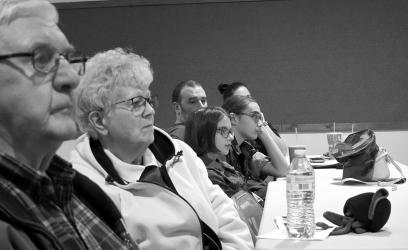
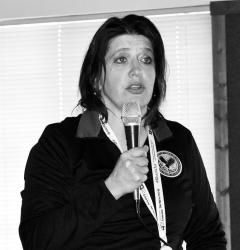
Kocer said the VA is partnering with the community to do more of a community-based outreach program (S.A.V.E) like she presented on Tuesday evening in Slayton. The coordinators go out in the community to try and reach veterans and partner with different organizations in the community. “I work with different coalitions across southwest Minnesota, northwest Iowa and the east half of South Dakota,” she said.
Commander Brad Pagel believed it was extremely important for the American Legion Erwin March Post 64 to do its part to bring the Suicide Prevention Training to the area. “Suicide awareness is very importance, especially with the stuff that’s gone on recently,” Pagel said. “It’s a local, state and national crisis, so it’s something we need to do more of around here. Even as rural as we are, we’ve seen (suicide).”
Kocer explained that everyone has a role to play in preventing suicide. It is a myth that mental health can’t affect you because it can affect anyone. In 2020, statistics revealed that 1 in 5 American adults experienced a mental health condition in a given year and that 1 in 6 young people have experienced a major depressive episode. Also, 1 in 20 Americans have lived with a serious mental illness, such as schizophrenia, bipolar disorder or major depression.
Kocer also pointed out that friends and family can be important influences in helping someone get the treatment and services they need. “The power of connection, that’s what saves lives,” she said.
A third myth is that mental health issues are a result of personality weakness or charter flaws and that people can “snap out of it” if they try hard enough. “That’s not the way mental health works” Kocer said. “It’s truly an imbalance, not a character flaw.”
In 2021, there was an average of 17.5 veteran suicides a day. While there was a 10-digit national suicide hotline for many years, anyone in crisis can now dial 9-8-8 for help. Veterans wishing to speak to a veteran should dial 9-8-8 and press 1.
The VA S.A.V.E Training is designed to help anyone act with care and compassion if they encounter a veteran who is in crisis or experiencing suicidal thoughts. The acronym S.A.V.E. can help you remember the important steps involved in suicide prevention.
S stands for Signs of Suicidal Thinking. Some of them include hopelessness or feeling like there is no way out, anxiety, agitation, sleeplessness or mood swings, rage or anger, feeling like there is no reason to live, engaging in risky activities, increasing alcohol or drug use and withdrawing from family and friends.
A stands for Ask the Question. You need to know how to ask the most important question of all — “Are you thinking of killing yourself?” Kocer said to avoid implying anything negative or saying something such as “are you thinking of doing something dumb?” “You never know when you’re going to be that person (that someone confides in),” Kocer said.
V stands for Validate the Veteran’s Experience. What seems minor or even silly to you might feel too big to handle for a 10-year-old, so it’s best not to judge or try to minimize a person’s feelings. Let them know help is available. Most of all, be willing to listen. Let them do the talking.
E stands for Encourage Treatment and Expedite Getting Help. If a veteran is having suicidal thoughts, remain calm and reassure them that help is available. Do not keep it a secret or leave him or her alone. Call 9-1-1 if needing immediate help.