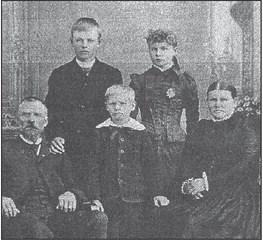
By Jenny Kirk Nestled high on a hill overlooking Beaver Creek and roughly midway between Hadley and Slayton is a Murray County farm with a remarkable family history that goes back 150 years. Embrick Engebretson officially homesteaded 160 acres there nearly 15 years before the village of Slayton was even incorporated.
Recently, Engebretson Farms was recognized for the sesquicentennial milestone — not only has the farm been owned and operated solely by the family for the last 150 years but it is also the very first sesquicentennial farm recognized in Murray County. “Embrick homesteaded this before there was really anything going on here in the county,” fifth-generation farm owner Mike Engebretson said. “Slayton wasn’t here.
There weren’t any roads. Now there’s been five generations of us. And throughout all 150 years, it’s only been farmed by us. No renters. I think that’s pretty rare.”
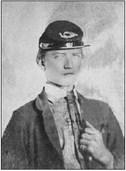
Embrick Engebretson was born on June 22, 1846, in Norway, and came to America with his parents, Andrew and Emily (Erickson), in 1853. The family — Embrick was the oldest of eight or nine children — settled on a homestead in Fillmore County. “Embrick was in the Civil War,” Mike Engebretson said. “His physical to get in the Civil War was done by William Mayo, who, with his sons, is the one who started the Mayo Clinic.”
He located his claim, but having gone to Jackson to spend the winter, he returned in spring 1870 to find his claim taken by someone else. He then settled on 160 acres in Section 32, which was eventually homesteaded, though he ultimately acquired 322 acres of land in the area.
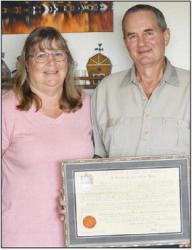
Much like the land that changed hands from Engebretson fathers to sons over time, the original deed to the homestead, dated Aug. 20, 1873, and signed by U.S. President Ulysses S. Grant, was preserved, framed and passed down every generation. “Imagine coming to this country on a ship when you’re 8, settling in Minnesota, going to the Civil War and then heading out to the unknown,” Mike Engebretson said. “That’s what my great-great grandpa did.”
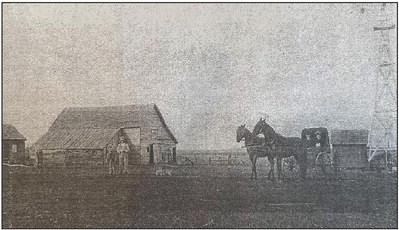
It’s believed that Embrick lived in some type of dugout until he built a sod house. In December 1876, he married Elizabeth “Lizzie” Tenneson, also a native of Norway. The couple was blessed with four children — Adolf, Tillie, Edward and Alvin — three of which were born in the sod house. At some point in the 1880s, Embrick built a wood house. “The youngest in the family was born in the house they built on the hill, which is about where this house sits today,” Mike Engebretson said. “It was pretty good size, though it was added onto a couple of times. I remember being in the house several times. I was 21 years old when that house was torn down in about 1980.”
Embrick and Lizzie’s granddaughter, Merle Lindland, penned remembrances of the time period, recalled in part by her parents, Edward and Agnes. She said her grandpa was a serious individual but that her grandma was fun-loving. Lindland added that most of the food the family ate was raised on the farm, though they also took eggs to town, picked wild fruit and caught fish — oftentimes Lizzie speared the big fish with a pitchfork and other times, Embrick netted them.
When the homestead was granted in 1873, it had only been 11 years since the local tragedy known as the Lake Shetek Massacre during the Dakota Conflict of 1862 took place at Slaughter Slough, roughly 15 miles away. Early on, Embrick reported seeing a few Native Americans passing by but had no interactions with them. The family did find a lot of artifacts that emerged each spring from the soil circling the ancient campfires, though. “It’s believed that the building site had been used for Indian pow wows,” Mike said. “It makes sense because the creek is right over the hill. It was probably a popular site for them.”
While few trees existed amongst the tall prairie grasses back then, today there is a flourishing grove of trees protecting the house that Mike and his wife, Gail, live in on the homestead. “Embrick planted all the oak trees for a windbreak to the northwest,” Mike said. “He planted the oak trees from here down to the creek. You can still see a couple furrows that he plowed. The grove of oak trees that he started is still thriving down there. It’s a heck of a grove, too. The wind and snow doesn’t get up here.”
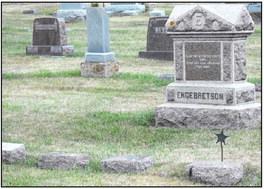
Embrick Engebretson not only raised his family and produced crops on the farm but was also very active in various organizations, including the township board, Grand Army of the Republic and John Logan post of Slayton. He died at his home on Jan. 17, 1909, at the age of 62. Lizzie died in 1918 at the age of 66. The couple is buried in the cemetery north of Slayton, as are many other Engebretson family members.
Three of the children received a quarter of land while the fourth got the equivalent of it when their parent’s died. Mike Engebretson’s great-grandpa Edward got the homesteaded property and lived there his entire life, passing away at the age of 82. He and his wife, Agnes, owned the homestead from
— Merle, Edward “Allen,” Nona and Eunice. “When (my great grandpa) Edward died, (my grandpa) Allen bought the farm, but died two years later at 57 years old,” Mike Engebretson said. “Then my dad (Charles) bought it.”
Charles and Betty owned the homestead from 1970-2007.
They were blessed with two children — Mike and Diane.
When Charles died in 2007, Mike took over as the fifth-generation owner. “I’ve been farming the land for my whole life,” Mike Engebretson said. “I was just farming with my dad. I went to school for a couple years out Mike owns half of the homestead, while his 86-year-old mom, Betty, owns the other half but rents the land to him. “It was difficult losing my dad, especially somebody you worked with every day,” he said. “He was the only business partner and workmate I ever had, besides being my dad. And they lived just on the other side of the creek, about a quarter mile away.”
Along with the usual agricultural crops, the Engebretsons oftentimes raised livestock, though the old white milking barn built by Edward is the only historic structure that visibly remains. There’s also an old plow that Allen’s wife, Minnie, had, but no one seems quite sure who purchased it or when that took place. Mike and Gail moved to the property about 1980. They built their current home there in 1989. “I raised sheep for 35 years,” Mike Engebretson said. “The sheep started with my great grandpa, but my grandpa, Allen, was all cattle. He was a cattle guy all the way. My dad had sheep and cattle, but I only had sheep.”
At some point, 30 acres of pastureland from the homestead was sold off. “We’d like to get that back to keep it in the family,” Gail Engebretson said.
Regardless, Mike and Gail don’t foresee selling any of the 130 acres they currently own, citing their commitment to keep the land in the family. After all, there’s a lot of blood, sweat and tears that kept it going for so long. “It’s hard to imagine how hard Embrick had to work,” Mike said. “I can’t fathom how any of them did it — the women, too. You had to be hardworking. That’s the only way they could’ve made it.”
Though Mike and Gail have two sons — Andrew and Jacob — neither has expressed interest in farming, so there are question marks regarding operations down the road someday. “I don’t think they want to take over,” Gail said. “They have their own lives.”
Jacob and his wife, Stacy, have two children — Eleanor “Ellie” (8) and Edward “Teddy” (3) — and live in Kalamazoo, Michigan. Andrew and his wife, Amy, have two children — Embrick (4) and Archie (1 ½) — and, along with Amy’s 12-year-old son, Cy Zenk, live in Slayton. They were all there when the Minnesota Farm Bureau presented Betty, Mike and Gail a sesquicentennial recognition plaque honoring Engebretson Farms during the 2023 Murray County Fair. The family also received a sesquicentennial farm certificate signed by Gov. Tim Walz, Agriculture Commissioner Thom Petersen and MFB President Dan Glessing.
The Engebretson name has garnered much respect over the years and will no doubt continue its farming legacy well into the future. Not only has the homestead sustained a handful of families over the last 150 years, Engebretson Farms has provided countless opportunities to create long-lasting memories for family members. The way multiple generations are connected by a way of life is quite unique and something everyone can celebrate. “Embrick got it going and we’re all part of it,” Mike Engebretson said. “It’s pretty special.”
(((I’m hoping you can do the below info as kind of a breakout box within the story. It doesn’t have to be too big or anything. I didn’t center the headings, but they should be, I think))))
Land Owner Ownership Years Embrick (Lizzie) 1873-1919 Edward L. (Agnes) 1919-1966 Edward Allen (Minnie) 19661970 Charles (Betty) 1970-2007 Mike (Gail) 2007-2023