Plant Power Day
Murray County 4-H started their summer programming this Monday featuring special guest, Lindsey Hause, the University of Minnesota Extension Youth Development Plant Science Intern. Hause shared the various ways popular plants in Minnesota grow, and different ways of utilizing them, including interactive activities for the youth to experience. The class was held from 1-4 p.m. on Monday, June 8th, at the Murray County 4-H Building.
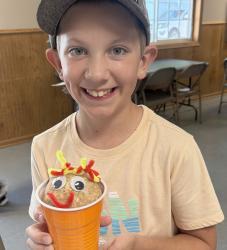
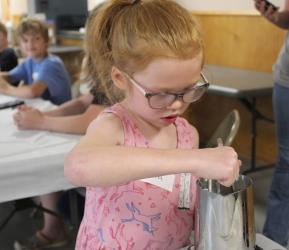
Hause started the class with a lesson on soybeans and the various ways we use them, including in soy wax. The youth, aged 5-14, were then able to utilize the soy wax by turning it into candles. Next, youth were tasked with guessing and counting the number of kernels in a corn cob after learning about the anatomy and history of modern corn. After that, Hause introduced the use of wheat by people today and how flour is made. With that information, youth were able to make their own home-made playdough made from flour. Lastly, Hause taught youth about the things plants need to survive and grow, like water, sunlight, and nutrients. Afterwords, youth created their own small grass plants in a nylon socking and placed in a pot to look like hair, in which they will apply their learning to keep the plant growing throughout the summer. Youth left the event with more knowledge on plants and their own experiments implementing what they learned.
Natural Resource Class Murray County 4-H hosted another class for their summer programming titled: “Natural Resources and What We Can Do to Make Them Last.”
The class was held from 1-3 p.m. on Monday, July 20th, at the Murray County 4-H Building, 3048 Broadway Ave., Slayton, MN.
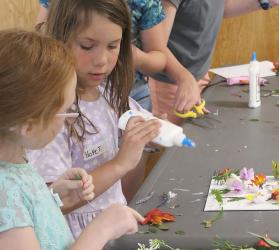
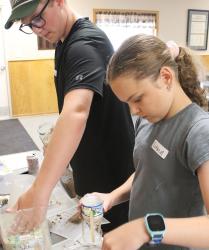
Nearly 25 youth arrived to the class and the class began with a quick lesson on what natural resources are, where they come from, how we use them, and how we prevent wasting them. The class was then led outside for a nature walk around the Murray County Fairgrounds to try to point out the several resources listed in the video. An arts and crafts project was then pursued, with the objective of using natural materials to create a portrait of each youth’s name on a canvas. Afterwords, youth were lead in a step-by-step demonstration on an experiment on water filtration. The youth used recycled water bottles to create a container that would hold multiple layers of sediment in which dirty water was poured through to see how the natural sediments cleared water. It was an educational and environmentally friendly experience that left the youth more knowledgeable on what they can do to protect our resources.
University of Minnesota Extension is an equal opportunity educator and employer.