By Justine Wettschreck A meeting on Sunday, August 9 is the result of community members asking what they can do to protect children. “Protecting Our Youth: A Community Response to Sexual Exploitation & Trafficking” will be at 1 p.m. Sunday in the Fellowship Hall of Christ Lutheran Church at 2959 Queen Avenue, Slayton, MN. All are invited.
Attendees can expect to learn how exploitation impacts Minnesota youth and how to recognize warning signs. They can also expect to discover how parents, schools, churches and community members can help keep children safe.
The round-table discussion will be led by Allan Bakke, the Southwest Minnesota Safe Harbor Regional Navigator at the Southwest Crisis Center.
“We often call children strong, brave and resilient, and they are,” Bakke said. “They bounce back from a lot, but not in all ways. We need to put into place things to rely on instead of resilience.”
The meeting is one part of building a community that is safe and where everyone can thrive.
According to information from Safe Harbor, trafficking statistics and data show that of the youth population of almost 141,000 in the southwest region (11 counties), a staggering 22 percent of those youth have been served by regional navigators of Safe Harbor Laws, which were enacted in 2011. Numbers from the southwest region are second to only the metro region, but according to Bakke, there is both good and bad in that.
“Rural areas lack a lot of in-
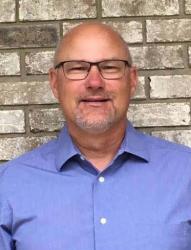
Allan Bakke, Regional Navigator at the Southwest Crisis Center
frastructure and are more isolated,” Bakke explained. “But the service providers – law enforcement, counselors, schools – have good relationships with each other and other protectors.”
Bakke said he’s been doing a lot of presentations from people who want to know how to protect their kids, grandkids. They want to know how to talk to the youth and they want to understand what exploitation looks like.
Bakke has a list of myths and truths that are eye-opening. He’ll share that list and more at Sunday’s meeting.
“It’s a myth that all of these kids are being abducted and sold into slavery,” he said. “This is about grooming and preying on vulnerabilities. It’s about isolation, poverty and growing into different relationships.”
The Southwest Crisis Center is a catalyst for change that needs to be made.
“We want to help move the community into a coordinated response,” Bakke said. “Schools, media, law enforcement, service groups… who needs to be involved? Everyone.”
This isn’t about creating a new committee or group, he explained. It’s about bringing various diverse groups onto the same page.
“Everyone tends to get involved in one or two things, and they can be very different, with very diverse purposes,” Bakke said. “But the one thing they all have in common? We care about our youth.”
This is about building the infrastructure of caring opportunities, and again, coordinating responses.
“The success will be in what happens next,” Bakke said.
Minnesota’s Safe Harbor for Sexually Exploited Youth Law, passed in July 2011, is designed to ensure that juveniles who are sexually exploited or at risk of exploitation are treated as victims – not criminals under Minnesota law. The legislation also ensures that those who purchase juveniles for sex are held accountable and that there is a system of response in place to move victims of sexual exploitation to recovery and healing. The Southwest Crisis Center is a Safe Harbor Agency serving communities and individuals in southwest MN with a Regional Navigator and Supportive Services.
The 11-county Southwest region includes: Cottonwood, Jackson, Lincoln, Lyon, Murray, Nobles, Pipestone, Redwood, Renville, Rock, and Yellow Medicine counties.