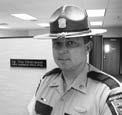
Sgt. Troy H. Christianson MN State Patrol PIO
Question: How do you determine if your tires are unsafe for winter driving?
Answer: Over the years, I have investigated numerous crashes where worn tires were a contributing factor. Tires with inadequate tread depth may cause your vehicle to skid or slide out of control on a slippery or wet road surface. It is important to remember that unsafe tires can hydroplane on both wet and snow covered roadways. When losing control of your vehicle, you can easily go off the road and into the ditch, or into oncoming traffic, possibly causing serious injury or death.
According to Minnesota State Statute 169.723 a tire shall be considered unsafe if it has: (1) Any part of the ply or cord exposed; or (2) Any bump, bulge or separation; or
(3) a tread design depth of less than 2/32 (1/16) of an inch measured in the tread groove nearest the center of the tire at three locations equally spaced around the circumference of the tire, exclusive of tie bars or for those tires with tread wear indicators; or (4) Been worn to the level of the tread wear indicators in any two tread grooves at three locations; or
(5) A marking “not for highway use,” or “for racing purposes only,” or “unsafe for highway use;” or (6) Tread or sidewall cracks, cuts or snags deep enough to expose the body cords.
My best advice is to keep an eye on your tires. Check your tire pressure often as it can be as much as 50% underinflated before it is visibly noticeable. Use a pressure gauge to check each tire and know what your pressure should be. Routine maintenance is good insurance; rotate, balance and be sure that your vehicle is correctly aligned, according to your vehicle owner’s manual.
Taking a few seconds to walk around your vehicle before leaving for your destination can pay off, potentially keeping you from getting into a crash. Speaking from personal and professional experience, the “snow” tires I run at this time of the year have made all the difference throughout some of the deepest snow and treacherous conditions. I would not want to be without them. Having a set of tires with good, legal tread depth will increase your chances of not being involved in a crash, especially when the weather and road conditions become poor.
Question: In Kansas we can dial *47 to connect to the Kansas Highway Patrol to report non-emergency issues. Things like road hazards, erratic drivers, motorists on the side of the road, etc. This number is *55 in Missouri and *211 in Iowa. Is there a similar number in Minnesota?
Answer: Minnesota does not have a standalone abbreviated number to call for non-emergencies. You should call 911 if you see a road hazard that could result in a crash or harm someone, any unsafe driving conduct that could result in a crash, or for someone who may need help.
If you’re calling 911, the dispatcher will ask you some routine questions, including:
• What is your emergency?
• What is your location and direction of travel?
• What is the vehicle and driver description including the license plate information, make, model and color of the vehicle? If you are following the vehicle as part of traffic, the dispatcher might keep you on the line to provide real time location updates that will help law enforcement get the correct vehicle stopped in a timely manner. You can avoid a ticket — and a crash — if you simply buckle up, drive at safe speeds, pay attention and of course, drive sober. Help us drive Minnesota Toward Zero Deaths.
If you have any questions concerning traffic related laws or issues in Minnesota send your questions to Sgt. Troy Christianson – Minnesota State Patrol at 2900 48th Street NW, Rochester MN 55901-5848. (Or reach him at, Troy.Christianson@ state.mn.us)