A Ride Through Time
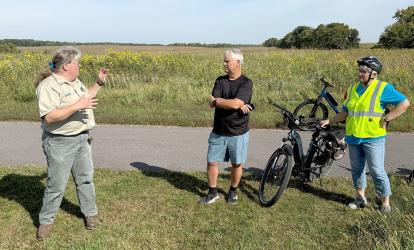
The Friends of the Casey Jones Trail recently hosted a six-mile guided bike ride near Currie, giving participants a unique chance to experience the rich natural and cultural history of Lake Shetek. Roseann Schauer, Lake Shetek State Park Manager and Naturalist, led the tour, drawing on her years as a park naturalist from 1998 to 2002. “This isn’t a race,” Schauer reminded riders. “It’s an opportunity to enjoy the trail, connect with the landscape, and learn about the history embedded in these woods and waters.”
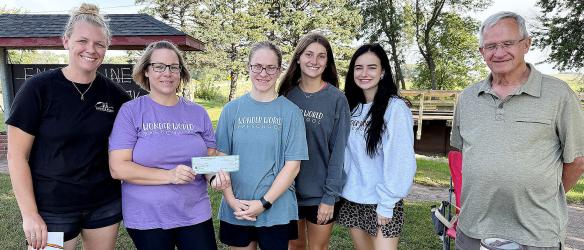
Supporting the Future of Murray County Families The event also brought attention to Wonder World Day Care in Slayton, which is currently raising funds through its Seeds of Wonder Campaign to build a new $2.1 million facility. Director Kristin Petros shared that their current lease at St. Anne’s Church will expire in July 2026, with the possibility of an extension until 2027, making the new project critical to the future of childcare in Murray County. With family childcare providers declining 40% statewide over the past decade, Wonder World remains the only licensed childcare center in the county. Petros explained that losing Wonder World would have significant impacts, not only on families but also on local businesses and essential services. The new facility, to be located near the Slayton pool, is already 50% funded, with the City of Slayton donating the land. As a non-profit serving Murray County since 1972, Wonder World continues to focus on its mission of providing exceptional childcare services that allow families to live, work, and thrive in the community. More information about the campaign can be found at Seeds of Wonder Campaign | Wonder World Preschool.
Shaped by Ice: The Glacial Legacy Minnesota’s landscape owes much to its glaciers. Schauer explained that the state was covered by ice sheets four times, the last retreating 10,000–12,000 years ago. Unlike mountain glaciers, these ice sheets were massive—up to a mile thick and stretching hundreds of miles. In southwest Minnesota, the receding glaciers left behind rolling hills and features like Buffalo Ridge. Lake Shetek itself formed in a dammed-up river valley, where sediment from Beaver Creek created a natural dam. The lake and park lie on the Altamont Moraine, a terminal moraine marking the farthest extent of an ice lobe during the Wisconsin glaciation. During the glacial melt, neighboring lakes—including Smith Lake, Lake Fremont, Bloody Lake, Armstrong Lake, Webster Slough, and Park Lake— were once part of a single, vast body of water. Lake Shetek contains three main islands: Valhalla, Keeley, and Loon Islands. Causeways connect the first two to the western shore, and another connects the third to the eastern shore. Shetek also connects to Bloody Lake Fremont Lake and Armstrong Slough.
From Paleo-Indians to Dakota Inhabitants Human history in the region stretches back thousands of years. Paleo-Indians arrived shortly after the glaciers retreated, followed by Woodland peoples. Later, the Dakota made the area their home, living off the lakes, prairies, and woodlands while managing the land with controlled fires to maintain open grasslands. The Dakota name for pelican, “Shetek,” was eventually applied to the birds and the lake itself, linking the region’s natural and cultural heritage.
European Arrival and the Fur Trade In the early 1800s, European fur traders traded beaver pelts with the Dakota, fueling the fur trade that connected the region to Europe. Explorers such as Joseph Nicollet and John C. Fremont mapped the area in the late 1830s, noting vast prairies of tall bluestem grass and waterways later incorporated into the Des Moines River system.
The 1862 U.S.–Dakota War and Its Legacy European settlement was interrupted by the Dakota Conflict of 1862, which began with the killing of settlers near Acton and escalated across southern Minnesota. Around Lake Shetek, roughly 50 settlers sought refuge before attempting to flee toward New Ulm; several were killed near present-day Slaughter Slough. Survivors and victims are commemorated at the Lake Shetek Monument, erected in 1924, preserving the history of broken treaties, cultural upheaval, and resilience.
Settlers, Mills, and Agriculture
Real settlement resumed in the late 1860s and early 1870s, when Archibald Currie and his son Neil arrived to build a flour mill on the Des Moines River. Earlier attempts had focused on sawmills to process oak timber, but priorities shifted to agriculture. Currie constructed dams and diversion channels, some of which remain visible today near the End O’Line Railroad Museum, illustrating the long-term human impact on the landscape.
Prairie and Oak Savanna Restoration Lake Shetek State Park, established in 1937, acquired farmland formerly owned by the Hanover family and Richard Hudson. Today, park staff are restoring oak savanna and prairie ecosystems once common in the region. Early restoration faced challenges with invasive plants, but prescribed burns, mowing, and cooperative farming agreements have encouraged native grasses and wildflowers to return. Visitors can now enjoy vibrant colors and diverse habitats, from bee balm and asters to sunflowers and deep burgundy grasses.
A Living History Lesson From glaciers and ancient peoples to the Dakota, European settlers, and modern restoration, Lake Shetek embodies centuries of history. Schauer emphasized that the Casey Jones Trail ride offered more than recreation—it allowed participants to reflect on how natural processes, human activity, and ongoing conservation efforts shape the landscape. “Walking through this oak savanna, you can see the resilience of these ecosystems and understand why people, past and present, are drawn to this place,” she said.